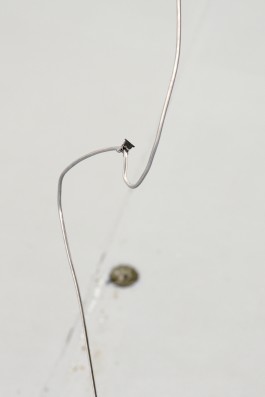
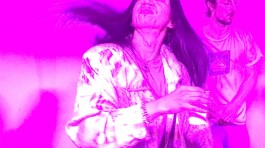
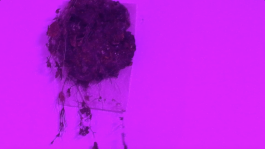
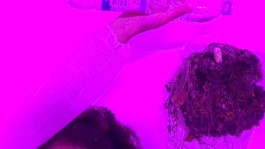
Martin Dörr (*1990, Pirmasens, Germany) is an artist whose work explores collective structures, systemic behaviors, and structural couplings. His practice revolves around systemic experimentation, modeling, and the abstraction of complex systems. By engaging in collaborations with unconventional, non-human, and technical agents, Dörr intervenes in established structures—expanding and transforming them through alternative narratives, narrators, and modes of narration.
> > RECENT Interview: Sleepwalking Systems – Martin Dörr in Conversation with Fakewhale


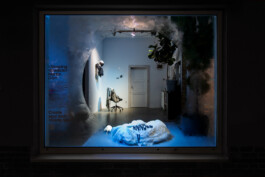
>Window Exhibition and Access Point, Atelier Wäscherei, Offenbach a. M., 22/11/25 – 21/12/25
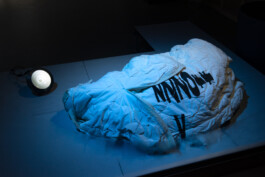
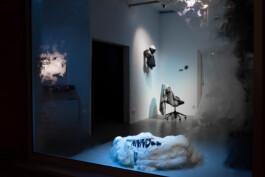
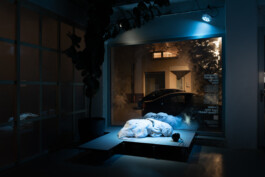
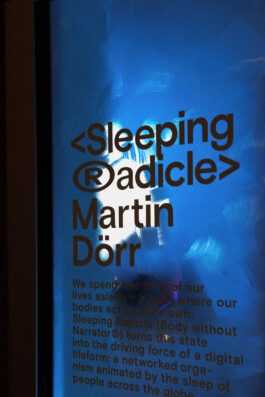
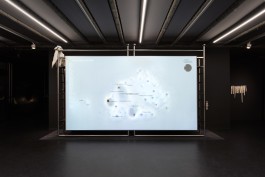
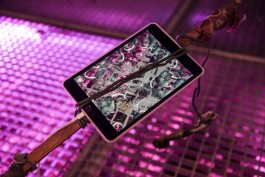
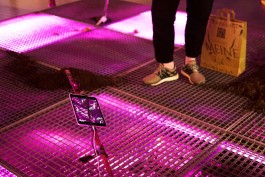
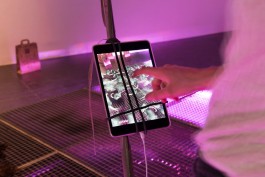
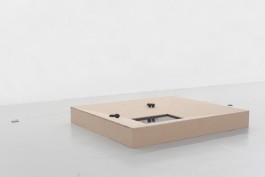
With Sleeping Radicle, the exhibition space becomes a physical and digital access point to the Body without Narrator® network.
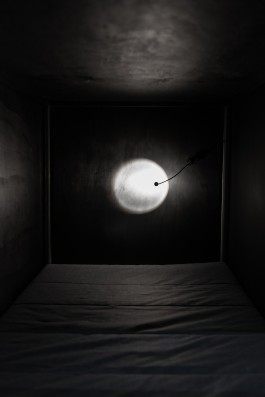
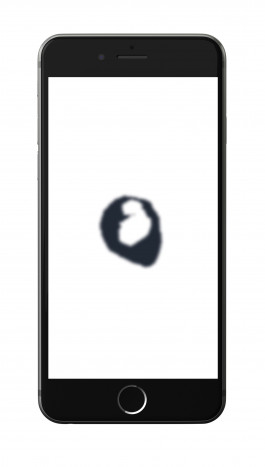
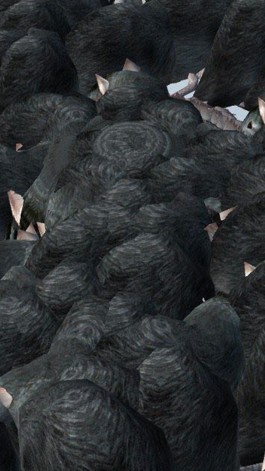
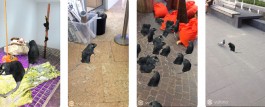
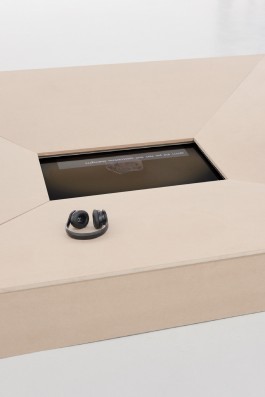
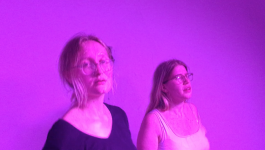
Visitors are invited to create their own Sleep Seed — a digital alter ego that becomes active only while they sleep. Registered sleepers around the globe, called Cultivators, connect and collectively grow and govern a simulated parasitic life-form, animated entirely by their individual and collective sleep — in real time.
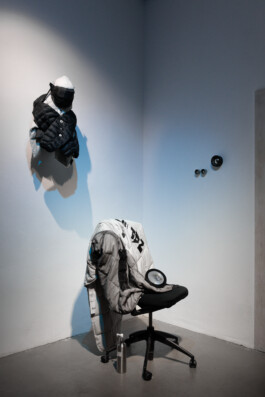
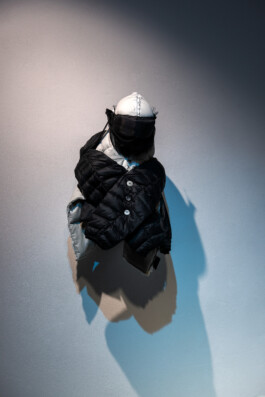
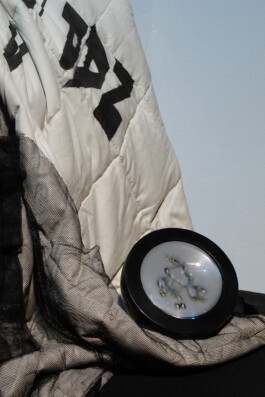
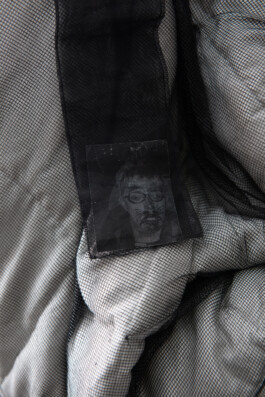
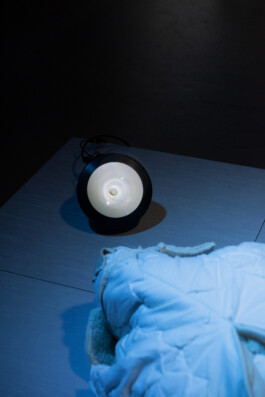
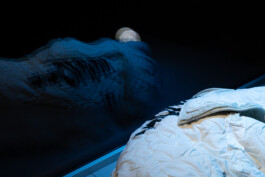
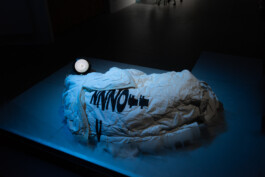
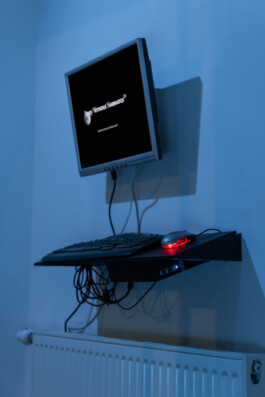
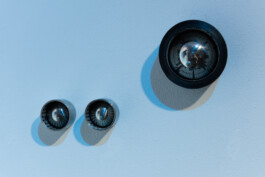
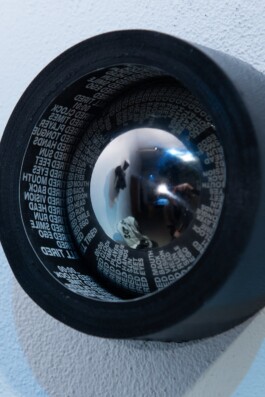
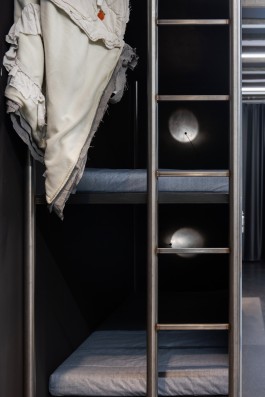
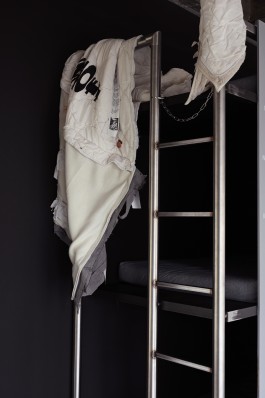
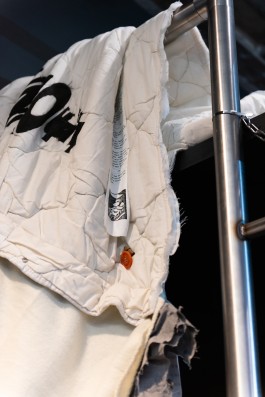
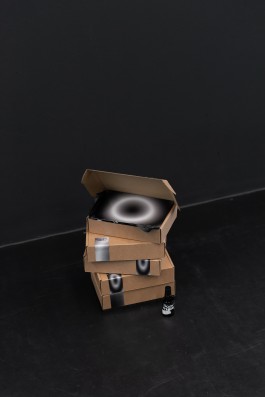
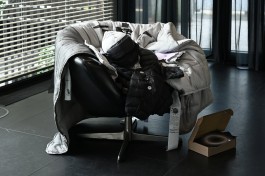
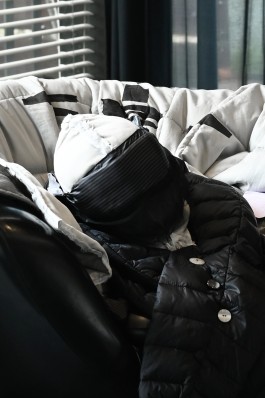
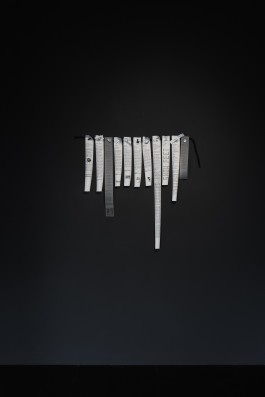
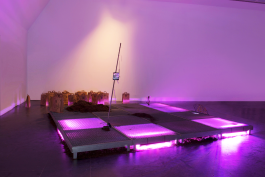
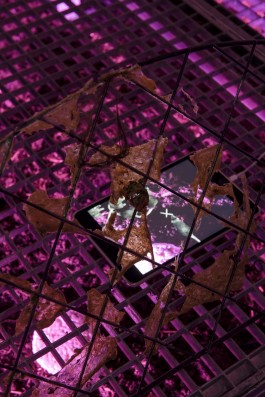
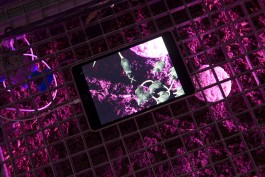
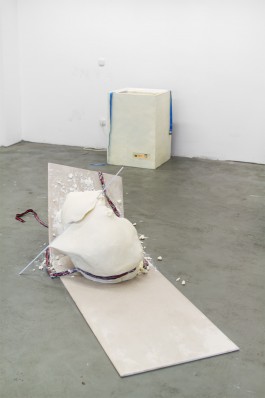
Besides the Seed Station at the exhibition entrance, where visitors can register, the installation displays the equipment of two current Cultivators alongside their corresponding Sleep Seeds.
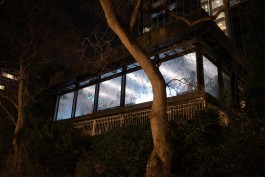
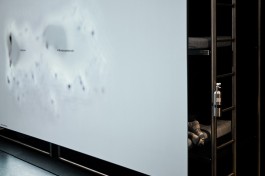
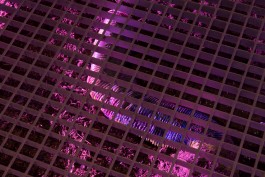
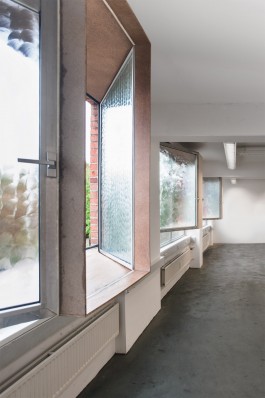
The artist’s own Sleep Seed inhabits the window space of Atelier Wäscherei, continuously evolving throughout the exhibition period in response to his real-time sleep patterns.


Body without Narrator (Latent Entity) > WEB > PDF > PRESS > Publication
> Participatory, artificial life form > Global sleep tracking infrastructure > Live simulation, infinite duration, 2025
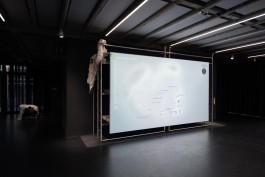
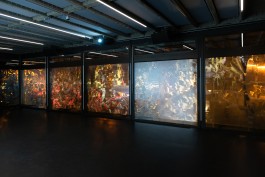
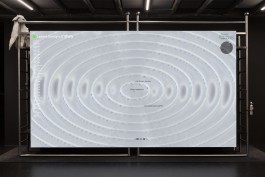
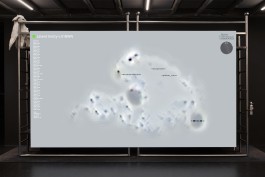
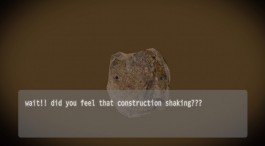
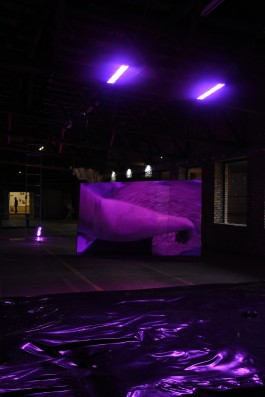
In the exhibition “Body without Narrator,” the digital, planetary entity “Latent Entity” becomes active within the glass architecture of the saasfee*pavillon in Frankfurt am Main. “Latent Entity” is an artificial, participatory life form, a collective organism that is linked live to the sleep of people worldwide. It is generated in the Unity video game engine with the help of AI and is active/inactive depending on the sleep activity of the users. Their changing, individual sleep phases and cycles influence the development and behavior of the collective organism in real time.
*from different time zones and countries, including Australia, Chile, Germany, Finland, France, Hong Kong, India, Kazakhstan, Macau, and South Korea.


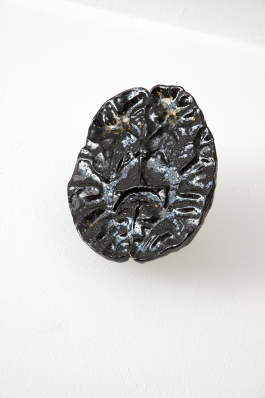
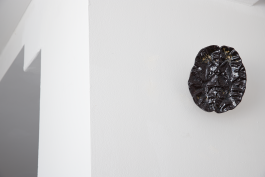
Topography of a Thought
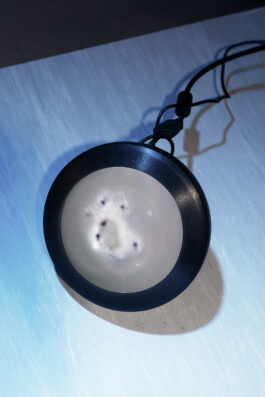
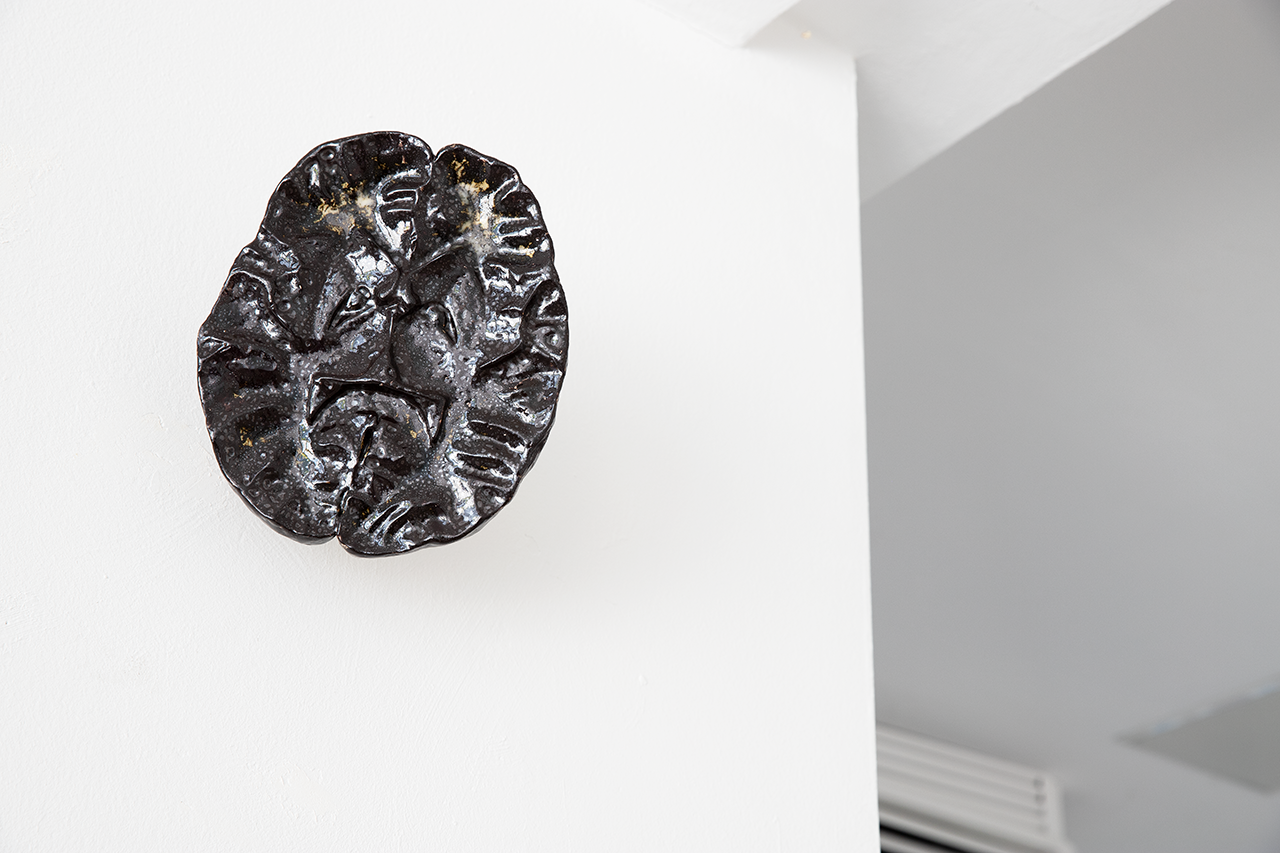
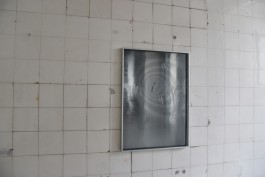
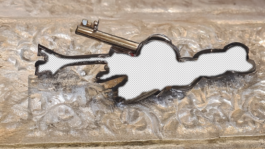
> Object > Ceramic (20 x 18 x 2cm), monitor mount (movable), 2022
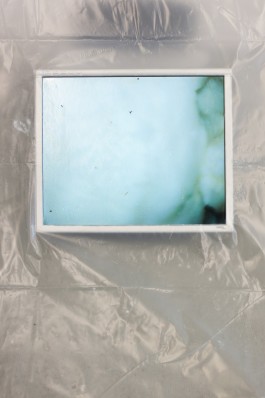
Topography of a Thought is a ceramic work that uses fMRI (functional magnetic resonance imaging) imaging techniques to visualize and map brain activity in real time. The work reconstructs the movement of a thought through the three-dimensional structure of the brain, fragmented into individual image layers. Mounted on a movable monitor arm, it becomes an observer itself, looking back into the exhibition space.
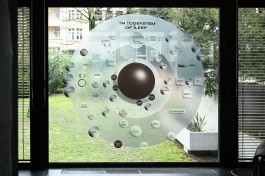

window (50°6‘25“N, 8°45‘4“E)
> Fat on glass, 2022
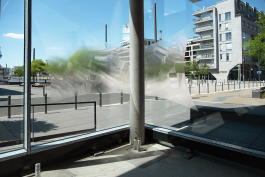
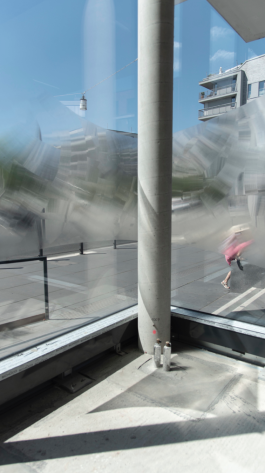
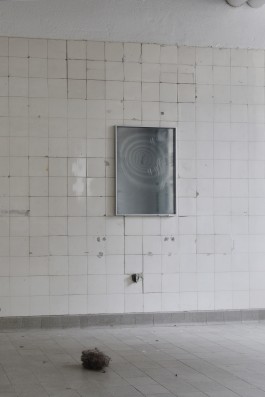
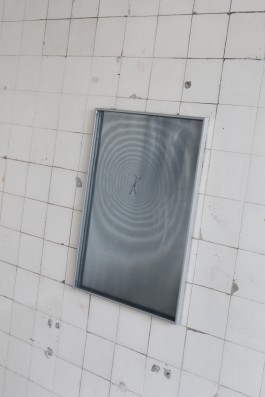
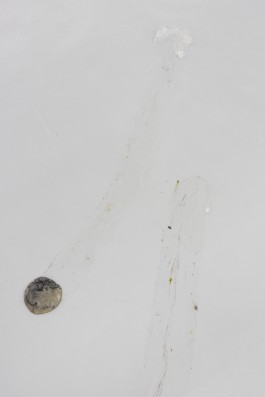
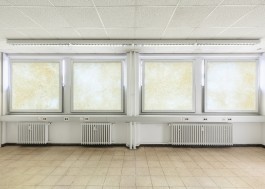
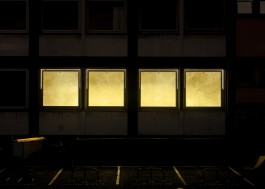
window <location> (since 2014) is a series of temporary and site-specific fat interventions on glass surfaces.
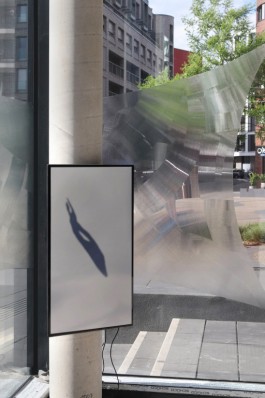
The translucent traces refer to everyday physical residues of the skin that remain through interaction at the interface between humans and machines, such as on touchpads and screens. They are time-specific markers of a transition in technological development, in which physical touch is increasingly being replaced by the disappearance of visible interfaces and the incorporation of devices into our bodies and everyday lives as humans draw closer to machines.
window <location> places disturbances at the transparent architectural threshold between inside and outside, thus disrupting the mutual perception of both spaces. Digital-looking scenarios emerge, creating grids and abstract characters that wander through the space depending on the incident light.


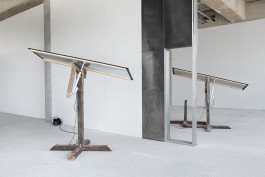
Flat Orbits (Maps*Mists*Making Predictions) > VIDEO
>Kinetic installation, 2020
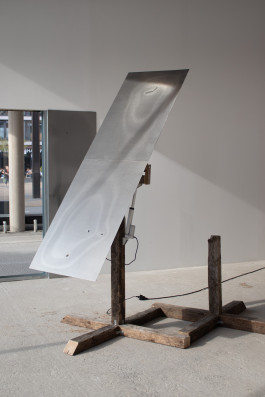
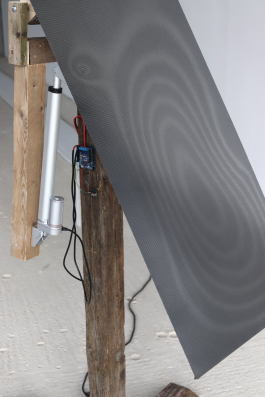
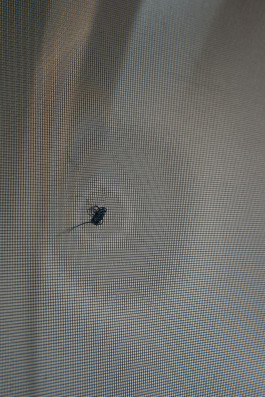
The kinetic objects in “Flat Orbits” are modeled after industrial solar trackers that follow the pre-calculated path of an algorithmic sun—depending on their location. On a global scale, they attempt to optimize a flat, constant plane that is kept perpendicular to the predicted solar radiation. The surface of this mathematically optimized abstraction is active in “Flat Orbits”: it captures various materials and arranges them into flat constellations—material assemblages embedded and arranged in an algorithmically regulated space that intertwines digital and physical systems. They do not remain static, but react to the actual incident light, the movement of the sculptures, and the viewers.


Inhabit (Maps*Mists*Making Predictions) > VIDEO
> Digital Companion, Mobile App, Live Simulation, 2020
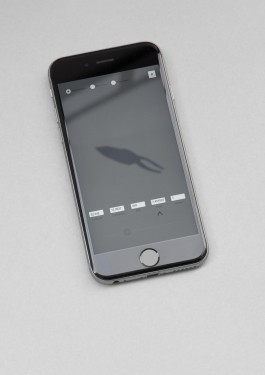
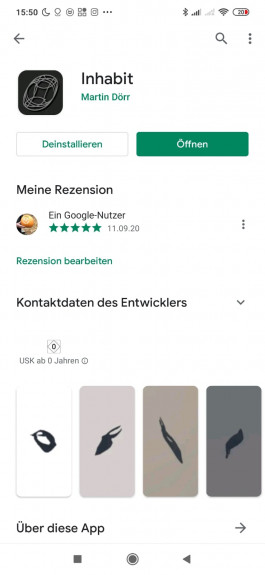
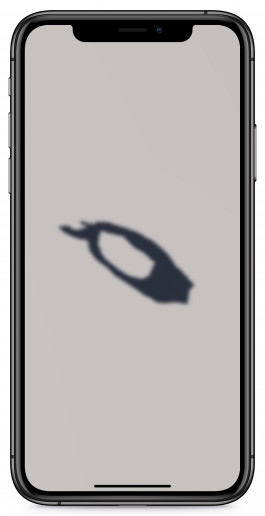
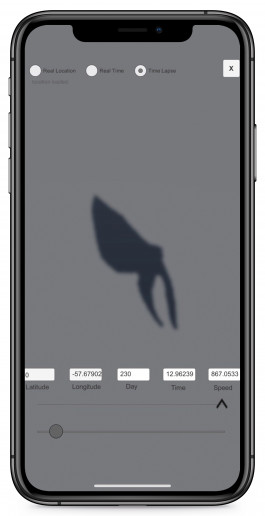
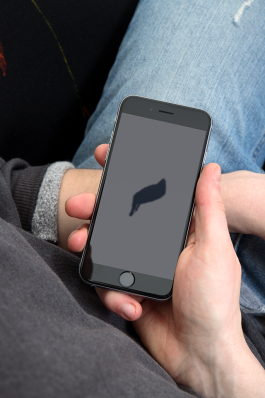
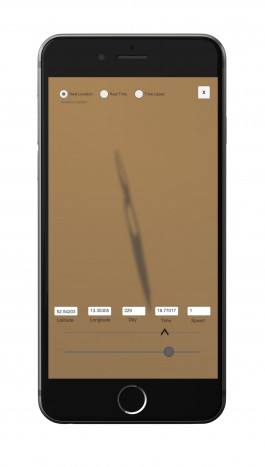
“Inhabit” is a globally accessible, location- and time-specific digital companion. Developed in the 3D environment of the Unity game engine, the project is based on a solar algorithm used to control movable solar modules. In the simulation, an invisible object casts its shadow on the earth—depending on the respective location and time of day. These shadows are accessible via an app and generate millions of varying, simultaneously existing forms that are in constant flux. “Inhabit” decouples the shadow from the body and, as a companion, suggests an individual, indeterminate experience of time – as a counterpoint to the metrically clocked time of digital devices.


window (50°6‘45“N, 8°45‘16“E) (Maps*Mists*Making Predictions) > VIDEO
> Fat on Glass, 2020
window <location> places disturbances at the transparent architectural threshold between inside and outside, thus disrupting the mutual perception of both spaces. Digital-looking scenarios emerge, creating grids and abstract characters that wander through the space depending on the incident light.


String Fingers (Opelvillen Rüsselsheim) > PRESS
>Installation (excerpt), 2019
Fat on glass, aluminum, 3D printing, nylon, mirror; 70 x 50 x 2.5 cm;
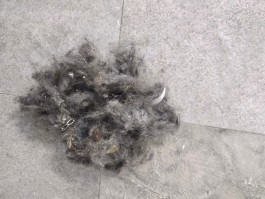
Artificial and natural hair, various particles and fragments of a GPS route, steel, plastic 3D printing; 15 x 20 x 20 cm.


Compost Cloud (Frankfurter Kunstverein) > PRESS
> Collaboration, installation, mobile app, platform, 2018
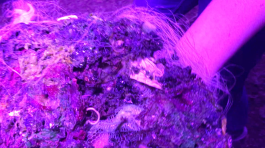
The Compost Cloud initiative is part of a broad-based exploration of participatory composting processes. It addresses composting as a cross-species process that is influenced in its living, hybrid composition by human and, perhaps even more so, non-human actors. The shredding of compostable biomass serves to accelerate the exchange of energy between organisms that interact with each other in diverse and reciprocal ways.


> Gaming Setup, 2h20min live simulation, 2017
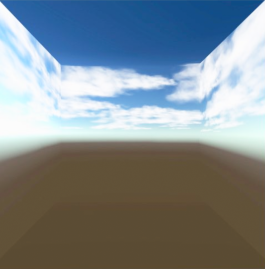
The increasing complexity of software is countered by increasingly user-friendly interfaces. Skybox, physics engine, rigid body. The beginning of an increasingly complex depth in which the core of things is constructed. The human user becomes a developer, (simultaneously a creator and an explorer).


Conductive Pathways (shared dangers, charged yearnings) > PDF
> Installation, 2016
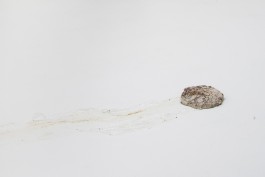
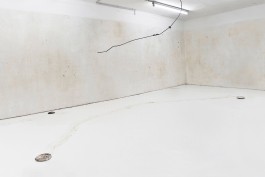
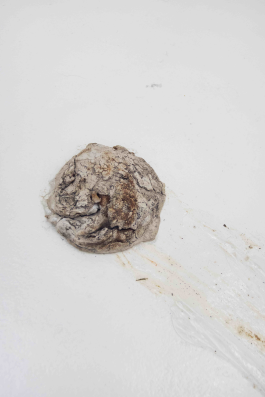
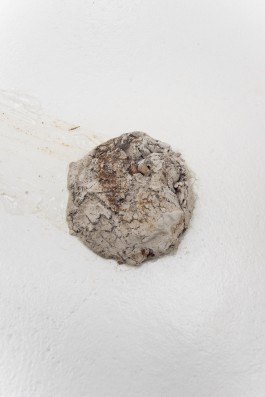
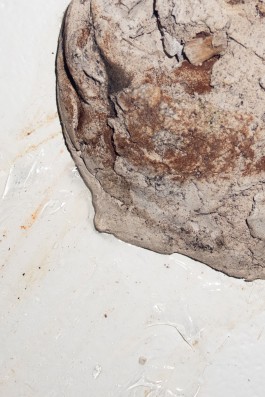
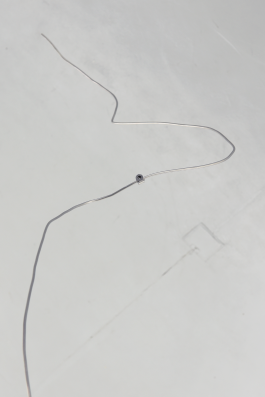
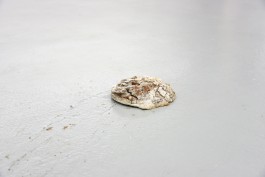
The lightning rod, which is actually part of the building’s protection system, is transformed in such a way that lightning could potentially be drawn away from the outside weather and directed into the exhibition space. The opening hours of the exhibition are no longer determined by time, but depend on the forecast weather conditions; the exhibition space becomes a risk landscape, opening up new transformative potential for material and system dependencies. Collections of particles bound in unfired clay wander through the space on contact gel pathways. The dirt from the floor has been rolled onto the wall and seems to stick to it as if statically charged.


Compost faster > PDF > https://soundcloud.com
> Collaboration, installation, action, environment, 2017
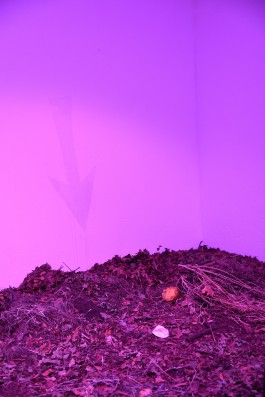
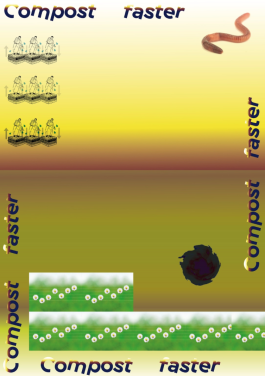
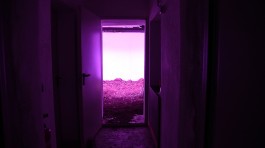
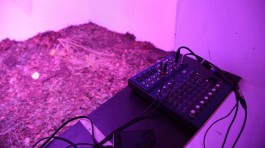
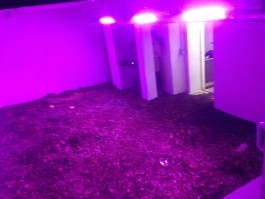
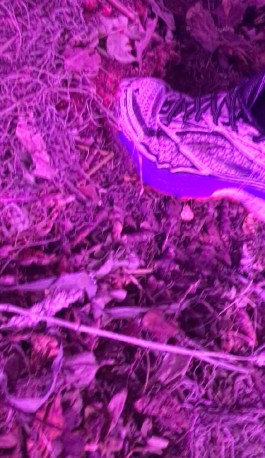
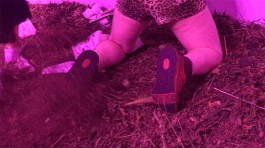
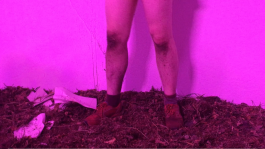
“Compost faster” – socio-ecological utopia, spatial installation, and action in which the physical body of the participant is embedded in a system of decay and reformation. Organic matter and social mass grow together to form a spatial compost hybrid, whose dynamics are intended to promote processes of exchange and transformation among its actors.


Cytecyte > PDF
> Installation, 2015
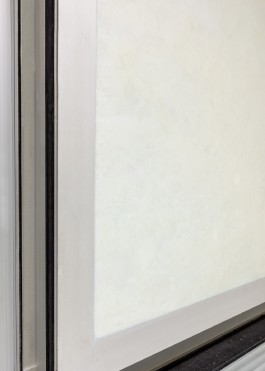
“Cytecyte” intervenes in the exhibition space in the entrance area of the Zollamt Gallery. The security mechanisms of the four windows have been removed so that they can be rotated 180°. A layer of vegetable fat applied to the window frames alters the transparency and materiality of the glass. The fat, a substance extracted from nature, becomes part of the architectural element and its functional space.


Verband > PDF
> Three-part room installation, 2014
The room installation “Verband” consists of several parts: an architectural intervention, sculptures made of solid, industrially hardened vegetable fat, and necessary supporting and protective sculptures. All parts of the installation are in a continuous process of influencing each other.

> > > > > Recent exhibition:
Synchronized Collapse
48°46′56″N
9°10′37″E < < < < <

All rights reserved © MARTIN DÖRR
Martin Dörr (*1990, Pirmasens, Germany) is an artist whose work explores collective structures, systemic behaviors, and structural couplings. His practice revolves around systemic experimentation, modeling, and the abstraction of complex systems. By engaging in collaborations with unconventional, non-human, and technical agents, Dörr intervenes in established structures—expanding and transforming them through alternative narratives, narrators, and modes of narration.
> > RECENT Interview: Sleepwalking Systems – Martin Dörr in Conversation with Fakewhale


>Window Exhibition and Access Point, Atelier Wäscherei, Offenbach a. M., 22/11/25 – 21/12/25
With Sleeping Radicle, the exhibition space becomes a physical and digital access point to the Body without Narrator® network.
Visitors are invited to create their own Sleep Seed — a digital alter ego that becomes active only while they sleep. Registered sleepers around the globe, called Cultivators, connect and collectively grow and govern a simulated parasitic life-form, animated entirely by their individual and collective sleep — in real time.
Besides the Seed Station at the exhibition entrance, where visitors can register, the installation displays the equipment of two current Cultivators alongside their corresponding Sleep Seeds.
The artist’s own Sleep Seed inhabits the window space of Atelier Wäscherei, continuously evolving throughout the exhibition period in response to his real-time sleep patterns.


Body without Narrator (Latent Entity) > WEB > PDF > PRESS > Publication
> Participatory, artificial life form > Global sleep tracking infrastructure > Live simulation, infinite duration, 2025
In the exhibition “Body without Narrator,” the digital, planetary entity “Latent Entity” becomes active within the glass architecture of the saasfee*pavillon in Frankfurt am Main. “Latent Entity” is an artificial, participatory life form, a collective organism that is linked live to the sleep of people worldwide. It is generated in the Unity video game engine with the help of AI and is active/inactive depending on the sleep activity of the users. Their changing, individual sleep phases and cycles influence the development and behavior of the collective organism in real time.
*from different time zones and countries, including Australia, Chile, Germany, Finland, France, Hong Kong, India, Kazakhstan, Macau, and South Korea.


Topography of a Thought
> Object > Ceramic (20 x 18 x 2cm), monitor mount (movable), 2022
Topography of a Thought is a ceramic work that uses fMRI (functional magnetic resonance imaging) imaging techniques to visualize and map brain activity in real time. The work reconstructs the movement of a thought through the three-dimensional structure of the brain, fragmented into individual image layers. Mounted on a movable monitor arm, it becomes an observer itself, looking back into the exhibition space.

window (50°6‘25“N, 8°45‘4“E)
> Fat on glass, 2022
window <location> (since 2014) is a series of temporary and site-specific fat interventions on glass surfaces.
The translucent traces refer to everyday physical residues of the skin that remain through interaction at the interface between humans and machines, such as on touchpads and screens. They are time-specific markers of a transition in technological development, in which physical touch is increasingly being replaced by the disappearance of visible interfaces and the incorporation of devices into our bodies and everyday lives as humans draw closer to machines.
window <location> places disturbances at the transparent architectural threshold between inside and outside, thus disrupting the mutual perception of both spaces. Digital-looking scenarios emerge, creating grids and abstract characters that wander through the space depending on the incident light.


Flat Orbits (Magma Maria) > VIDEO
>Kinetic installation, 2020
The kinetic objects in “Flat Orbits” are modeled after industrial solar trackers that follow the pre-calculated path of an algorithmic sun—depending on their location. On a global scale, they attempt to optimize a flat, constant plane that is kept perpendicular to the predicted solar radiation. The surface of this mathematically optimized abstraction is active in “Flat Orbits”: it captures various materials and arranges them into flat constellations—material assemblages embedded and arranged in an algorithmically regulated space that intertwines digital and physical systems. They do not remain static, but react to the actual incident light, the movement of the sculptures, and the viewers.


window (50°6‘45“N, 8°45‘16“E) (Maps*Mists*Making Predictions) > VIDEO
> Fat on Glass, 2020
window <location> places disturbances at the transparent architectural threshold between inside and outside, thus disrupting the mutual perception of both spaces. Digital-looking scenarios emerge, creating grids and abstract characters that wander through the space depending on the incident light.


Inhabit > VIDEO
> Digitaler Begleiter, Mobile App, Live Simulation, 2020
„Inhabit“ ist ein globaler, orts- und zeitspezifischer, digitaler Begleiter. Ein vielfacher Schatten, der in die westliche Konzeption und Wahrnehmung numerischer Zeit eingreifen soll, indem er uns die Möglichkeit gibt, uns an dessen laufenden Prozessen neu zu kalibrieren.
„Inhabit“ ist Teil der Entwicklung sogenannter „non-linear navigation tools“, die sich mit Prozessen der technischen Abstraktion zur zeitlichen und räumlichen Navigation von Personen und Prozessen auseinandersetzen und spekulativ erweitern.


String Fingers (Opelvillen Rüsselsheim)
> Installation (Auszug)
Fett auf Glas, Aluminium, 3D-Druck, Nylon, Spiegel; 70 x 50 x 2,5 cm; Kunst- und Naturhaar, versch. Teilchen und Partikel einer GPS-Route, Stahl, Plastik 3D-Druck; 15 x 20 x 20 cm;
Labor, Opelvillen Rüsselsheim, 2019


Compost Cloud (Frankfurter Kunstverein) > PRESS
> Collaboration, installation, mobile app, platform, 2018
The Compost Cloud initiative is part of a broad-based exploration of participatory composting processes. It addresses composting as a cross-species process that is influenced in its living, hybrid composition by human and, perhaps even more so, non-human actors. The shredding of compostable biomass serves to accelerate the exchange of energy between organisms that interact with each other in diverse and reciprocal ways.


Conductive Pathways (shared dangers, charged yearnings) > PDF
> Installation, 2016
The lightning rod, which is actually part of the building’s protection system, is transformed in such a way that lightning could potentially be drawn away from the outside weather and directed into the exhibition space. The opening hours of the exhibition are no longer determined by time, but depend on the forecast weather conditions; the exhibition space becomes a risk landscape, opening up new transformative potential for material and system dependencies. Collections of particles bound in unfired clay wander through the space on contact gel pathways. The dirt from the floor has been rolled onto the wall and seems to stick to it as if statically charged.
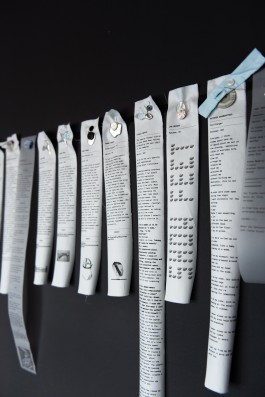


Compost faster > PDF > https://soundcloud.com
> Collaboration, installation, action, environment, 2017
“Compost faster” – socio-ecological utopia, spatial installation, and action in which the physical body of the participant is embedded in a system of decay and reformation. Organic matter and social mass grow together to form a spatial compost hybrid, whose dynamics are intended to promote processes of exchange and transformation among its actors.


> Gaming Setup, 2h20min live simulation, 2017
The increasing complexity of software is countered by increasingly user-friendly interfaces. Skybox, physics engine, rigid body. The beginning of an increasingly complex depth in which the core of things is constructed. The human user becomes a developer, (simultaneously a creator and an explorer).


Cytecyte > PDF
> Installation, 2015
“Cytecyte” intervenes in the exhibition space in the entrance area of the Zollamt Gallery. The security mechanisms of the four windows have been removed so that they can be rotated 180°. A layer of vegetable fat applied to the window frames alters the transparency and materiality of the glass. The fat, a substance extracted from nature, becomes part of the architectural element and its functional space.


Verband > PDF
> Three-part room installation, 2014
The room installation “Verband” consists of several parts: an architectural intervention, sculptures made of solid, industrially hardened vegetable fat, and necessary supporting and protective sculptures. All parts of the installation are in a continuous process of influencing each other.

> > > > > Recent exhibition:
Synchronized Collapse
48°46′56″N
9°10′37″E < < < < <

All rights reserved © MARTIN DÖRR